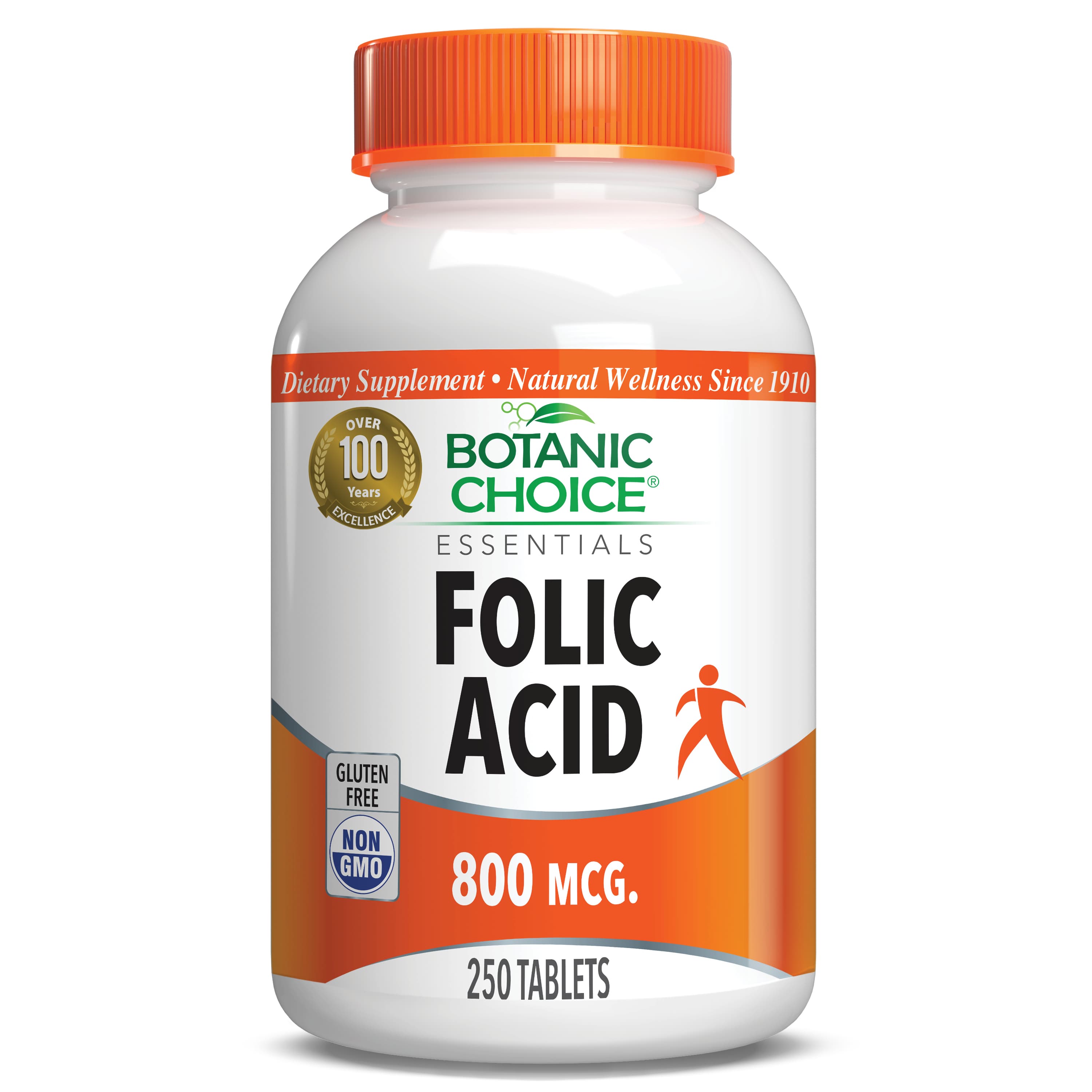
What it does
The NIH consumer sheet says the body needs folate to make DNA and other genetic material, and for cells to divide. Folic acid is the form used in fortified foods and most dietary supplements.
What research can and cannot say
The sheet says folic acid taken before pregnancy and in early pregnancy lowers the chance of a neural tube defect, a problem in a baby's brain or spine. It also says large amounts of folate from supplements can hide a vitamin B12 deficiency: the anemia can improve while the nerve damage does not. Food folate and a folic acid supplement are not interchangeable on that sheet.
A folate label does not show a birth outcome or a change in cancer risk. The 400 mcg folic acid figure is the sheet's instruction for people who could become pregnant. It is not a result printed by a bottle.
Forms and label reading
Supplements usually list folic acid. Methylfolate (5-MTHF) is also used. The sheet says people who could become pregnant should get folic acid, not 5-MTHF. Read the form, and read whether the panel prints mcg or mcg DFE.
These statements have not been evaluated by the Food and Drug Administration. This product is not intended to diagnose, treat, cure, or prevent any disease.
Amount and upper limit
Recommended amount. The NIH sheet lists 400 mcg DFE a day for adults. It lists 600 mcg DFE for pregnant teens and women and 500 mcg DFE for breastfeeding teens and women. DFE means dietary folate equivalents. The sheet says 240 mcg of folic acid and 400 mcg of food folate are both equal to 400 mcg DFE, because the body absorbs folic acid from fortified foods and supplements more readily than folate from food. Cited sheet
Folic acid for people who could become pregnant. The sheet says all women and teen girls who could become pregnant should consume 400 mcg of folic acid a day from supplements, fortified foods, or both, in addition to the folate they get from food. It says that figure should be folic acid, not 5-MTHF, including for people with an MTHFR C677T gene variant. Cited sheet
Upper limit. The sheet lists 1,000 mcg a day as the upper limit for adults, from supplements and fortified foods and beverages. That limit does not apply to folate naturally present in food. Cited sheet
Safety
The sheet says folate naturally present in food is not harmful, and that supplements and fortified foods should stay at or under the upper limit unless a clinician directs otherwise. Large folate supplements can hide a vitamin B12 deficiency by correcting the anemia while the nerve damage continues. High doses of folic acid might raise the chance of colorectal cancer in some people. Folate supplements can interfere with methotrexate when that medicine is used for cancer, and with some seizure medicines.
Food sources
The sheet names beef liver, asparagus, brussels sprouts, dark green leafy vegetables, oranges and orange juice, nuts, beans, and peas for food folate. It names enriched bread, flour, cornmeal, pasta, rice, fortified breakfast cereals, and fortified corn masa for added folic acid.