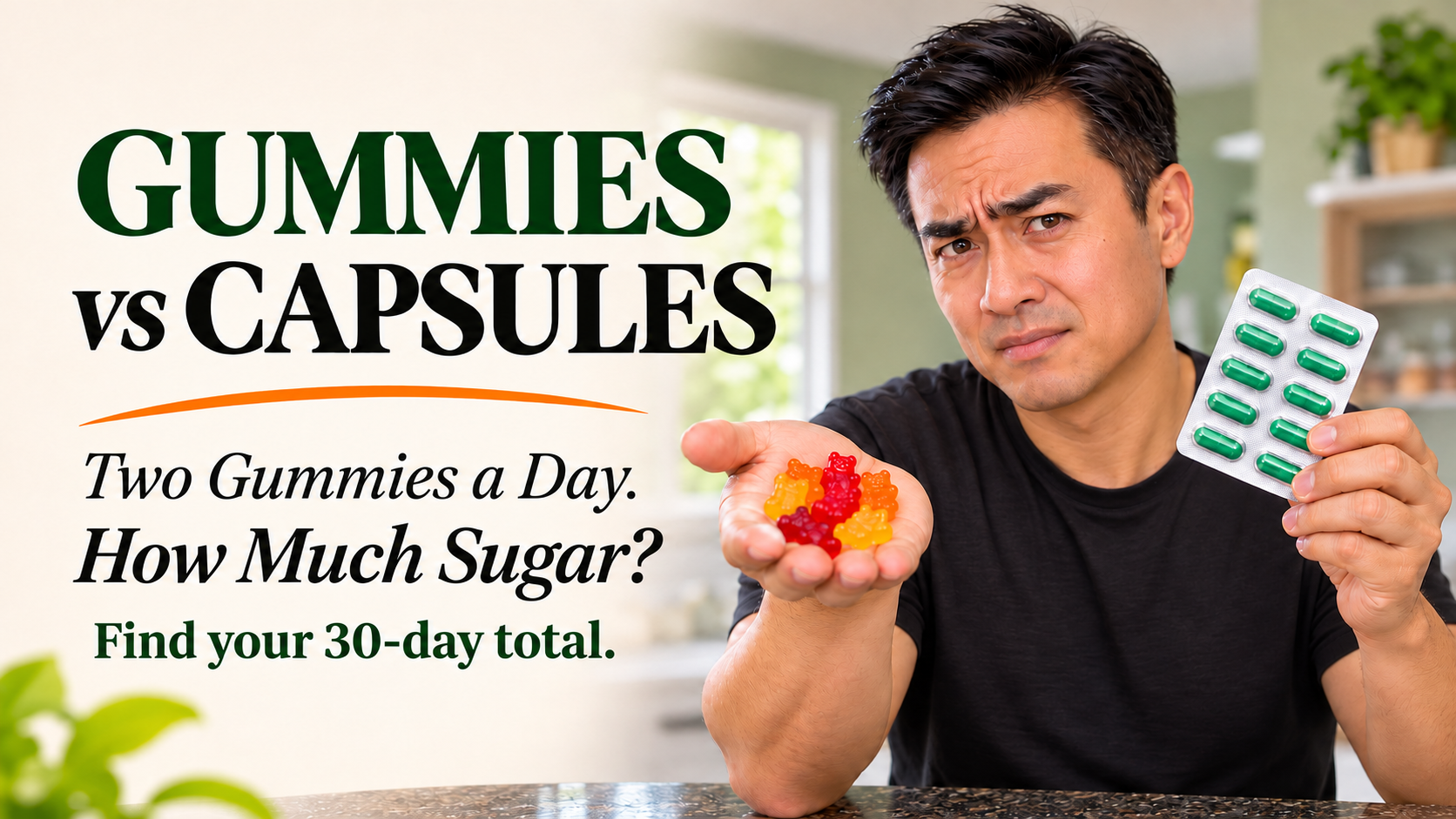
Gummies vs Capsules: Start With the Serving Size
One tablet. One vege capsule. Two softgels.
Those are the serving sizes in three supplement examples we reviewed. Each describes one serving, yet the number of pieces is different.
That small distinction matters when you ask, “Should I choose gummies or capsules?” Before comparing the formats, you need to know what each label’s numbers represent.
Start with the serving size, then read the ingredient amount for that serving. Counting gummies or capsules alone cannot tell you how the products compare.
Sugar on one serving
Open a gummy or a capsule
Published listings with a current price. Confirm the sugar line on the bottle before you buy. Some shopping links may be affiliate links. Zynava may earn a commission if you buy through them.
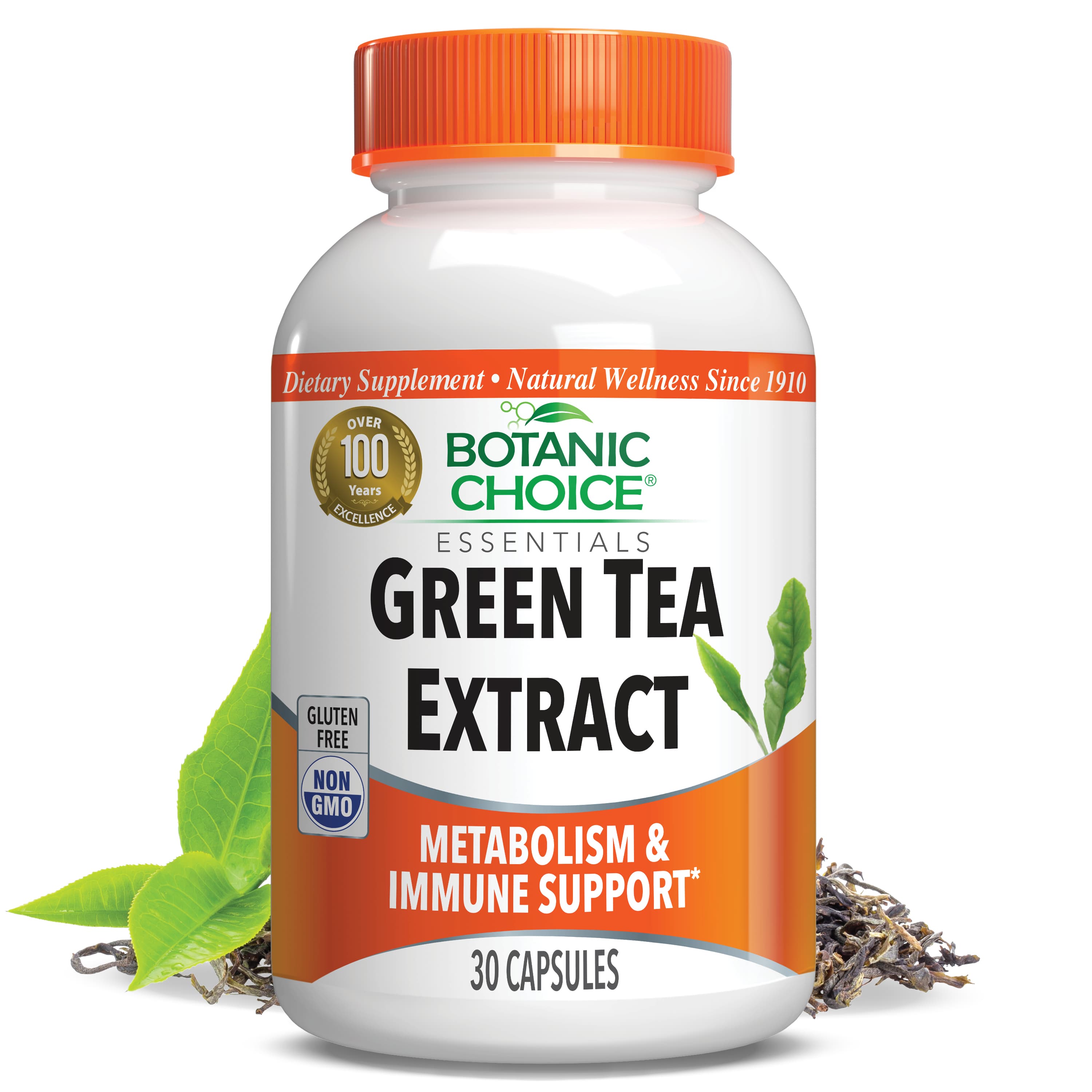 50% off
Green Tea Extract - 30 Capsules
Botanic ChoiceCapsule
1 Capsule
Regular price $6.00Sale price $3.002026-11-19
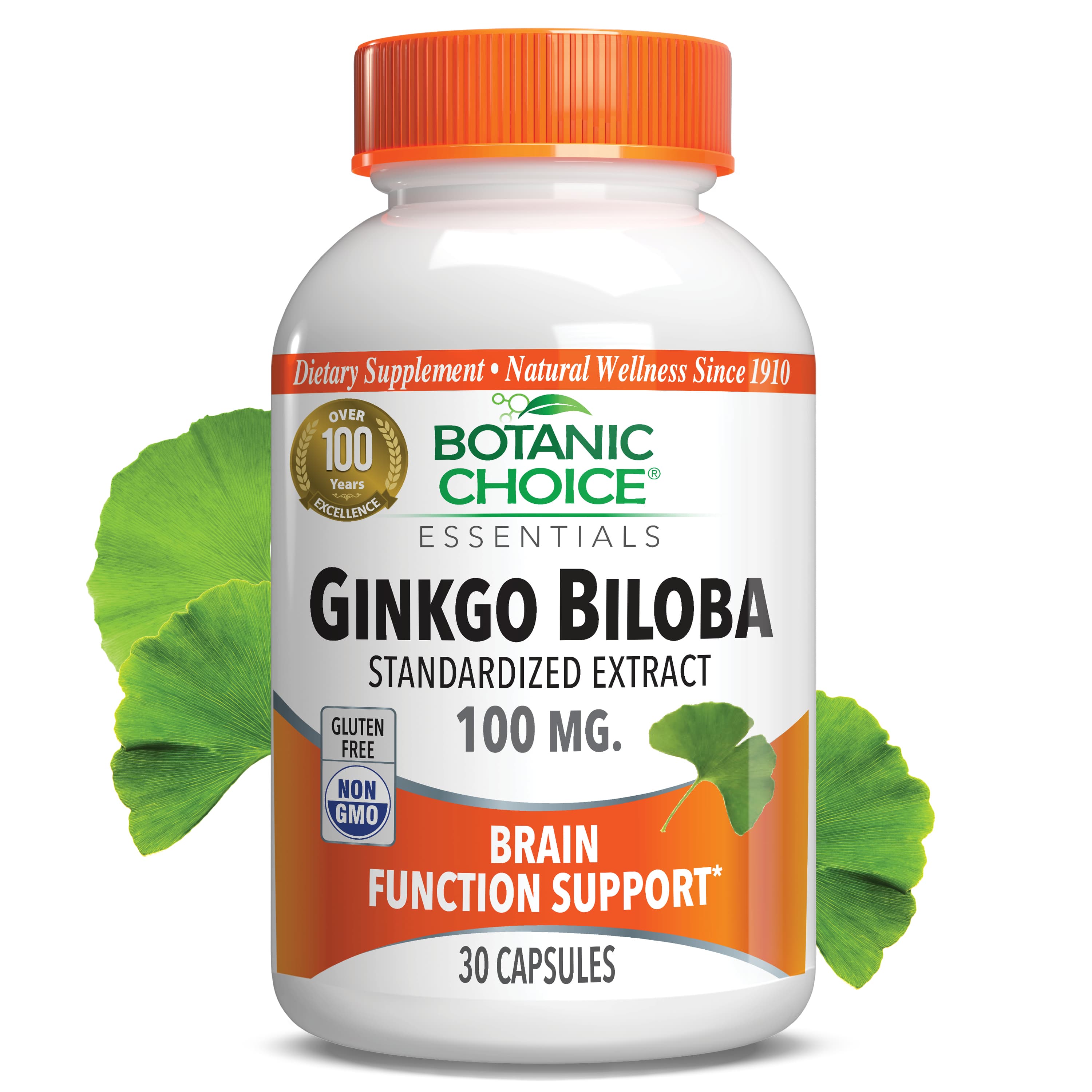 44% off
Ginkgo Biloba 100 mg - Memory Support Supplement - 30 Capsules
Botanic ChoiceCapsule
1 Capsule
Regular price $9.00Sale price $5.002026-11-19
 25% off
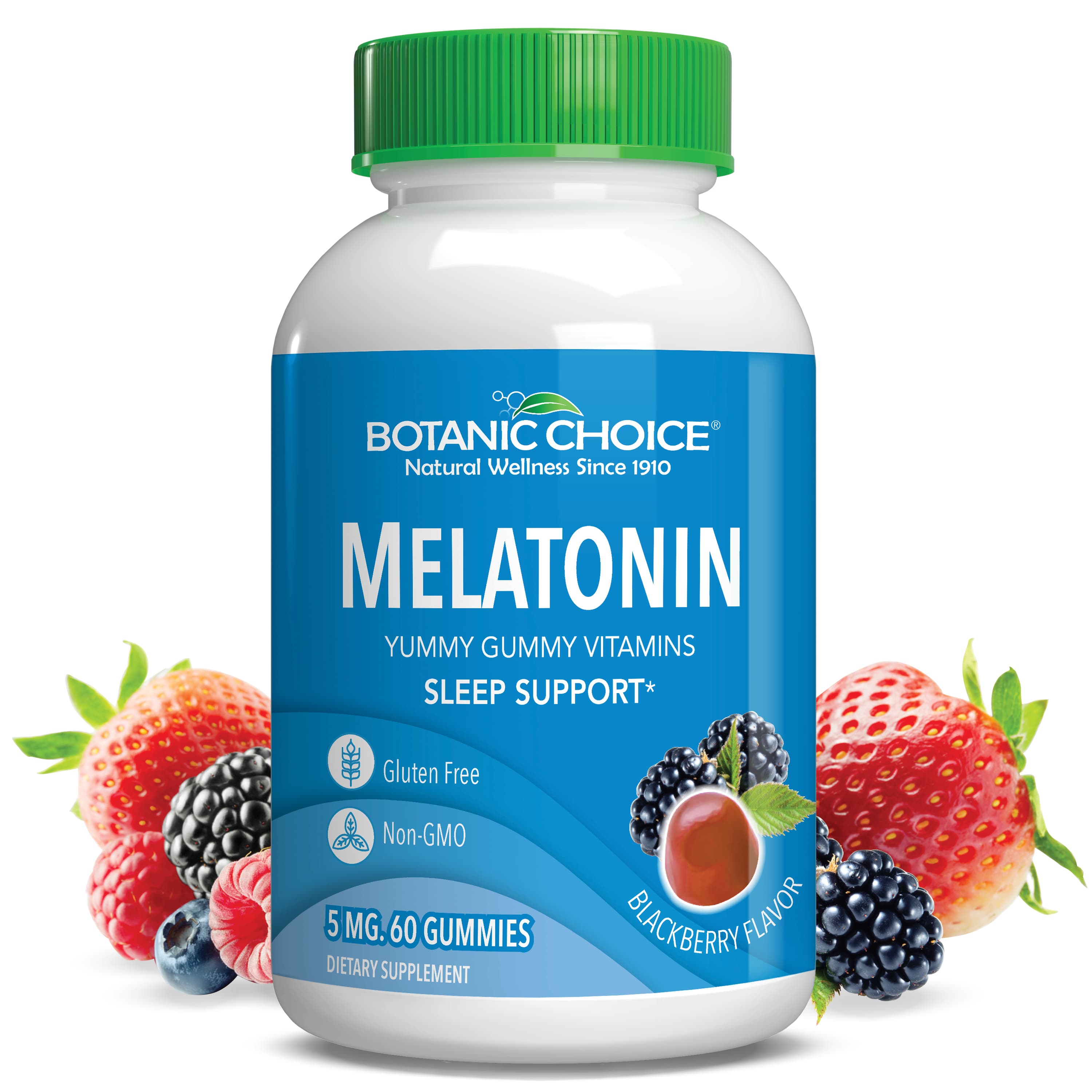
Melatonin 5 mg Gummy - 60 Gummies
Botanic ChoiceGummy
2 Gummies
Regular price $12.00Sale price $8.992026-11-19

Nature Made Multivitamin for Her Gummies
Nature MadeGummy
2 Gummies
$9.792026-11-17
Sugar record
Sugar line: Added sugars.
3 g of added sugars a day, 12 calories. 90 g over 30 days, 360 calories.
The filled sugar numbers are the illustrative example, not a product label.
One piece is not always one serving
A unit is one tablet, capsule, gummy, or softgel. A serving is the amount the label uses as its reference.
FDA guidance defines a supplement serving around the largest amount recommended on its label for one eating occasion, where applicable. Without that recommendation, the serving is one unit.1
“Per serving” and “per capsule” therefore do not automatically mean the same thing. Nor should you assume one serving equals an entire day’s suggested use: read the directions separately.
For example, the fish-oil information below lists 2 g of fish oil per two-softgel serving. Reading that as 2 g per softgel would double what the label actually states.
Three labels, three different serving bases
These selected product details show why the ingredient amount and serving size belong together.
| Product example | Listed ingredient | Amount per serving | Serving size |
|---|---|---|---|
| Vitamin D3 | Vitamin D3, as cholecalciferol | 125 mcg | 1 tablet |
| Ashwagandha extract | Ashwagandha extract (roots) | 450 mg | 1 vege capsule |
| Fish oil | Fish oil | 2 g | 2 softgels |
Source: selected product information supplied for this article. These are not complete label inspections or independently rechecked current retailer listings.
The vitamin D3 amount belongs to one tablet. The ashwagandha amount belongs to one vege capsule. The fish-oil amount belongs to two softgels together.
These are different ingredients, so the table is not a strength ranking. Converting everything into the same measurement unit would not make vitamin D3, ashwagandha, and fish oil interchangeable.
It also contains no gummy product. It teaches a way to read labels; it cannot decide whether gummies or capsules are preferable.
What to compare on your own bottles
FDA guidance identifies dietary ingredient names and quantities, serving size, and servings per container as core Supplement Facts information. A separate servings-per-container listing is not required when it repeats the net quantity information.1
For the products you are considering, record:
- The ingredient and its form: copy the full description.
- The amount and measurement unit: keep mcg, mg, or g attached to the number.
- The serving size: note how many pieces that amount covers.
- The servings per container: distinguish servings from the number of pieces in the bottle.
Start with products containing the same ingredient, then examine those details together. This makes the label comparison more meaningful without turning it into a claim about which product works better.
Comparing sugar? Use the label’s serving, too
The selected product details above do not report sugar or calorie amounts. We cannot calculate those values for these products.
For a product whose current label does provide sugar information, keep total sugars and added sugars separate. Added sugars are already included within total sugars; adding the two figures together would count the added portion twice.2
That gives you two distinct questions: How much total sugar does the recorded amount contribute? How much of it is added sugar?
If the retailer’s information does not show the needed value, check the complete label or ask the manufacturer. Leave an unconfirmed amount unknown.
Work out your sugar total
Start with four details:
| Detail | What to enter |
|---|---|
| Sugar per serving | Grams from either the total-sugars or added-sugars line; identify which one |
| Units per serving | The number of gummies, capsules, or other identical units in that serving |
| Units taken per day | Your recorded daily count |
| Number of days | The period you want to calculate |
Sugar per day = sugar per serving × units taken per day ÷ units per serving
Sugar over the period = sugar per day × number of days
For an approximate calorie contribution from that sugar, multiply its grams by four. FDA’s sugar guidance states that each gram supplies four calories.3
Here is an illustration—not label data for the products above:
Suppose a label lists 3 g of added sugar per two gummies, and the recorded use is two gummies daily for 30 days.
| Calculated result | Amount |
|---|---|
| Added sugar per day | 3 g |
| Added sugar over 30 days | 90 g |
| Estimated calories from added sugar per day | 12 calories |
| Estimated calories from added sugar over 30 days | 360 calories |
The 3 g belongs to both gummies combined. Multiplying it by two again would overcount.
These estimates describe the selected sugar contribution from that product. They are not its total calories, your total dietary intake, or a recommendation for how much to take. The calculation assumes the same daily count and equivalent units; it is not suitable for mixed packs containing different items.
So, gummies or capsules?
These examples do not establish a winner. They also do not establish sugar content, shell ingredients, gelatin sources, or whether particular products meet a gelatin-free preference. Those questions require additional product information.
What you can do is make the comparison concrete: choose two products, open their current labels, and write down the ingredient, amount, and serving size side by side. Check sugar and other ingredients where relevant to your preferences.
You can use Zynava to explore supplement information, then confirm the details on the current retailer or manufacturer label.
One tablet. One capsule. Two softgels. Before deciding between formats, make sure you know what one serving means.
Zynava helps you explore supplement information. It does not provide medical advice. Talk with a clinician before taking a supplement.
Sources
- Dietary Supplement Labeling Guide: Chapter IV. Nutrition Labeling. Independent reference. U.S. Food and Drug Administration. Retrieved .
Serving-size definition, Supplement Facts fields, and servings-per-container exception.
- Added Sugars on the Nutrition Facts Label. Independent reference. U.S. Food and Drug Administration. Retrieved .
Added sugars are included in total sugars.
- Interactive Nutrition Facts Label: Total and Added Sugars. Independent reference. U.S. Food and Drug Administration. Retrieved .
Each gram of sugar supplies four calories.